BOSTON — United under the banner of the Massachusetts Freedom of Information Alliance (MassFOIA), open-government groups today urge the state legislature to quickly pass recently filed legislation intending to modernize and rationalize the Massachusetts public records law. Their call to action coincides with a national celebration of open government known as Sunshine Week, from March 15-21.
 The state public records law is supposed to grant the public the right to access information about government operations from the executive branch and municipalities, subject to certain exemptions, such as to protect personal privacy. MassFOIA contends that the law is weak and needs updating for the digital age, having not been substantially amended since 1973.
Rep. Peter Kocot (D-Northampton) and Sen. Jason M. Lewis (D-Winchester) filed bills in both the House (HB 2772) and Senate (SD 1235) that aim to reform the public records law by eliminating technological and administrative barriers to its enforcement. Key provisions would update the law to reflect advances in technology, require state agencies to have a “point person” to handle records requests, rationalize fees for obtaining public records by having them reflect actual costs, and provide attorneys’ fees when agencies unlawfully block access to public information.
“Our public records law is broken,” said Carol Rose, executive director of the ACLU of Massachusetts, a founding member of MassFOIA. “Journalists, concerned citizens and others with a need to know how our government is working often can’t get the information they have a right to, because of excessive fees, long delays, or obstruction of one kind or another. The public records law hasn’t been substantially updated since 1973–now it’s time to bring it into the 21st century.”
Other groups included in the alliance are:
- Common Cause Massachusetts.
- League of Women Voters of Massachusetts.
- Massachusetts Newspaper Publishers Association.
- New England First Amendment Coalition.
According to MassFOIA, the proposed legislation aims to improve access to information that the law already defines as a public record. It would not alter the scope of the public records law or make any changes to existing exemptions, which include exemptions for personal privacy, criminal investigations, personnel records, trade secrets, and many other categories. Rather it would modernize outmoded language in the law and strengthen procedures for compliance and enforcement.
Specifically, the legislation would:
- Promote access to records in electronic form.
- Direct agencies to assign a “records access officer” to streamline responses to public records requests.
- Lower costs for requesters and limit charges for redacting documents to withhold information.
- Require attorneys’ fees when access to public records is wrongly denied, creating an incentive for agencies to obey the law.
“Let’s take the opportunity this Sunshine Week to discuss the state’s public records law and make meaningful, yet common sense improvements,” said Justin Silverman, executive director of the New England First Amendment Coalition. “As winter-weary residents of Massachusetts, we’re all looking forward to more warmth and sunshine. When it comes to the public’s right to know, however, let’s make sure sunlight shines on our government all year round.”
“The outmoded public records law is repeatedly thwarting the news media in their efforts to cover state and local government activities,” said Robert J. Ambrogi, executive director of the Massachusetts Newspaper Publishers Association. “The public has a right to know what their government officials are doing, but outrageous fee demands and lack of accountability frequently obstruct that right.”
“The point is to fix the law so it works the way it’s supposed to,” said Pam Wilmot, executive director of Common Cause Massachusetts. “Allowing courts to award attorneys’ fees is a common way to create an incentive for people to abide by the law and to provide a remedy when rights are violated. It’s shocking that 46 states have this kind of provision–as does the federal FOIA law–and Massachusetts doesn’t. As the cradle of liberty, Massachusetts should lead the way, not lag behind the rest of the country.”
FOR FURTHER INFORMATION, CONTACT:
Gavi Wolfe, Legislative Counsel
American Civil Liberties Union of Massachusetts
(617) 482-3170 x340; gwolfe@aclum.org
Robert J. Ambrogi, Executive Director
Massachusetts Newspaper Publishers Association
(978) 546-3400; ambrogi@legaline.com
Justin Silverman, Executive Director
New England First Amendment Coalition
(774) 244-2365; justin@nefirstamendment.org
Pam Wilmot, Executive Director
Common Cause Massachusetts
(617) 962-0034; pwilmot@commoncause.org
 Mike Sheehan, chief executive officer of The Boston Globe and former CEO of the advertising firm Hill Holliday, will be the keynote speaker at the annual meeting of the Massachusetts Newspaper Publishers Association.
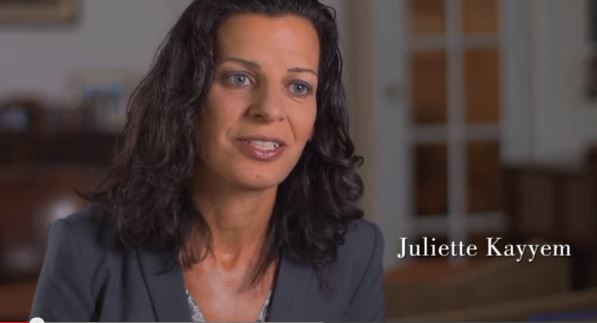 Until launching her campaign for governor, Kayyem was a columnist for the Boston Globe, analyst for CNN, and lecturer at Harvard’s Kennedy School of Government. In 2013, she was a
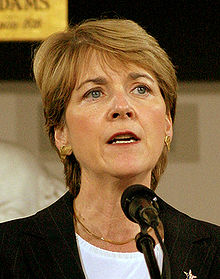 Massachusetts Attorney General Martha Coakley will be the featured speaker at this year’s luncheon. Re-elected to her second term as attorney general in 2010, Coakley previously served for eight years as district attorney in Middlesex County. Earlier, she was chief of the Child Abuse Unit in Middlesex. She began her legal career in 1979, practicing litigation at the firms Parker, Coulter, Daley & White and later at Goodwin Proctor. She joined the Middlesex DA’s office in 1986 and also served on the U.S. Justice Department’s Organized Crime Strike Force.